


 Language


More Language
Language 
Compare cabinet samples together under agreed lighting and under the lighting intended for the room. A design approved on a phone screen or under one convenient lamp may create a different impression beside an edge strip, worktop or neighbouring door in the finished scheme. A useful approval records the physical samples, viewing conditions and result.
Lighting can change the appearance of a surface. The more specific term metamerism describes a pair of samples that appear to match under one light source but cease to match under another. Seeing one cabinet look warmer at night is not, on its own, enough to diagnose a metameric mismatch.
Konica Minolta's visual-colour evaluation guide explains why controlled illumination, viewing conditions and comparison under different light sources matter. Its guidance supports a practical purchasing habit: bring the actual materials into the same review, rather than comparing memories of their colours.
| What you observe | What to check next |
|---|---|
| The cabinet and edge appear coordinated in daylight but separate under a room lamp. | Compare that same physical pair under controlled alternative lighting and record the result. |
| A glossy and a matte sample look different at one angle. | Review the agreed finish and viewing angle; a colour code alone does not settle gloss or texture. |
| A phone photograph looks different from the sample in front of you. | Use the image to identify the reference and location; return to the physical sample for approval. |
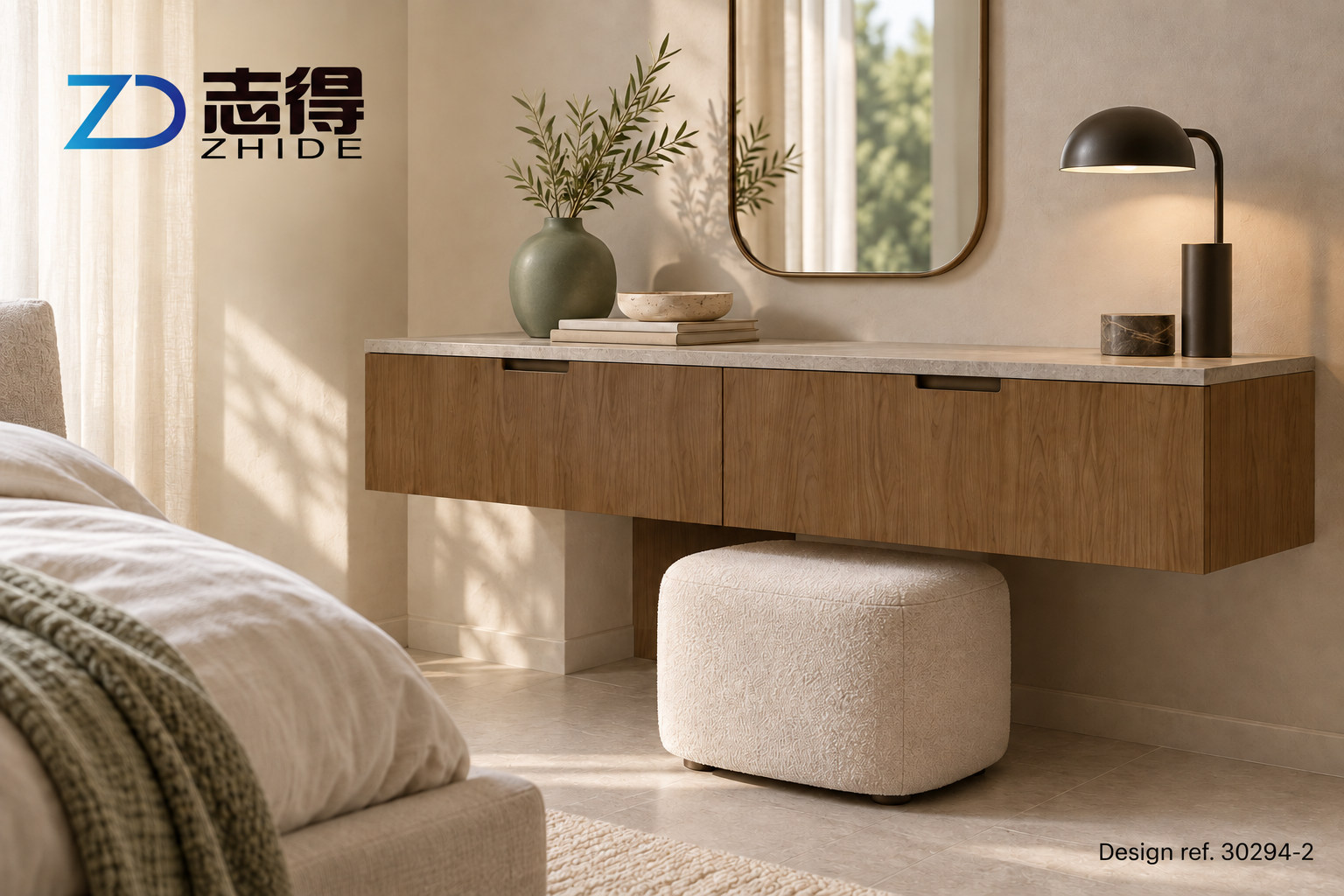
For a cabinet programme, put the proposed door face, edge strip and companion material into one labelled set. Identify which reference each piece represents. If a finished pressed sample is required, ask for it explicitly; do not treat a paper swatch as proof of the complete finished-panel appearance.
The vanity concept above uses company design 30294-2 to illustrate a furniture application. The surrounding pale surface and fabric are styling references. The image does not demonstrate a measured colour match, a particular edge-band product or an accepted production sample.
Choose a repeatable review condition with the supplier, then also consider the proposed room lighting. Where a controlled light booth is available, agree which light sources to use. For an interior mock-up, identify the actual luminaire or lamp used for the review. Record what was checked rather than describing every warm light as identical.
Konica Minolta's visual evaluation recommendations also discuss consistent sample presentation, lighting and viewing conditions. In our proposed cabinet workflow, that means keeping the sample arrangement and viewing method comparable when the supplier and buyer review the same set.
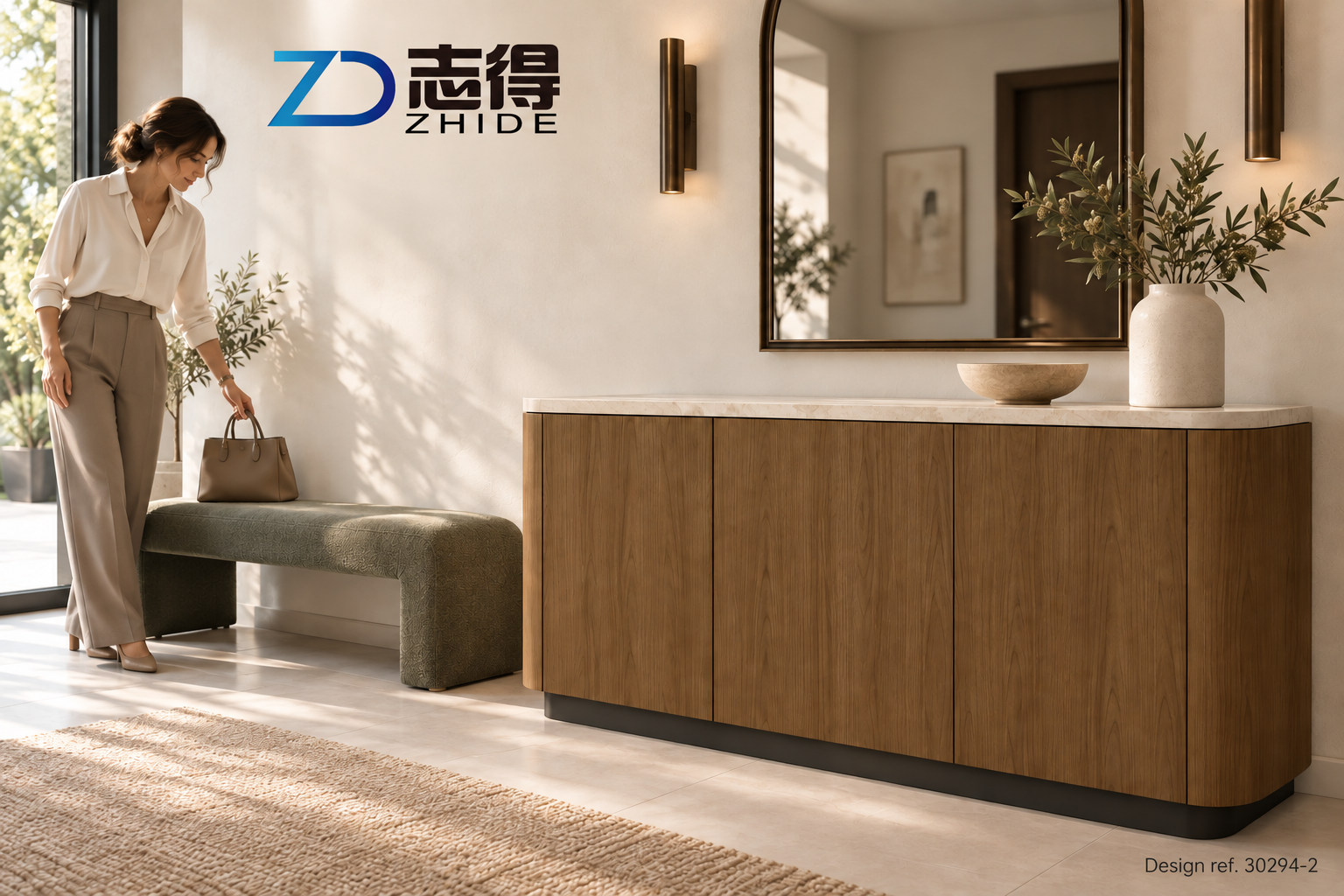
A photograph is useful for showing which pieces were compared, the viewing location and an obvious issue to discuss. Camera white balance changes how lighting is represented, as Sony's photography guidance illustrates; Adobe's colour-management explanation describes differences across devices. An emailed picture should therefore not silently replace the agreed physical reference.
When documenting a concern, include the sample IDs, light used and the relationship being questioned: door to edge, adjacent doors or cabinet to worktop. Ask the supplier to assess the same physical combination. This gives a clearer starting point than sending an isolated crop and asking for “the same brown.”
References: design code, sample ID, date and the material represented by each piece.
Appearance: the agreed colour reference, surface texture and finish.
Review conditions: light sources or room-light reference, sample arrangement and viewing method.
Result: accepted, revise or pending, with the specific relationship requiring attention.
Responsibility: who reviewed the set and which retained sample identifies the decision.
If instrumental colour data is part of the specification, agree the measurement method and acceptance criteria with the supplier. This guide does not assign one universal numerical colour tolerance to every decorative surface.
Use our catalogues to shortlist references and explore the decorative-paper collection. For a project discussion, email Eden with the design code and intended material combination. Sample availability and the review scope need confirmation for the enquiry. For later purchases, connect the approval record to the repeat-order version checklist.
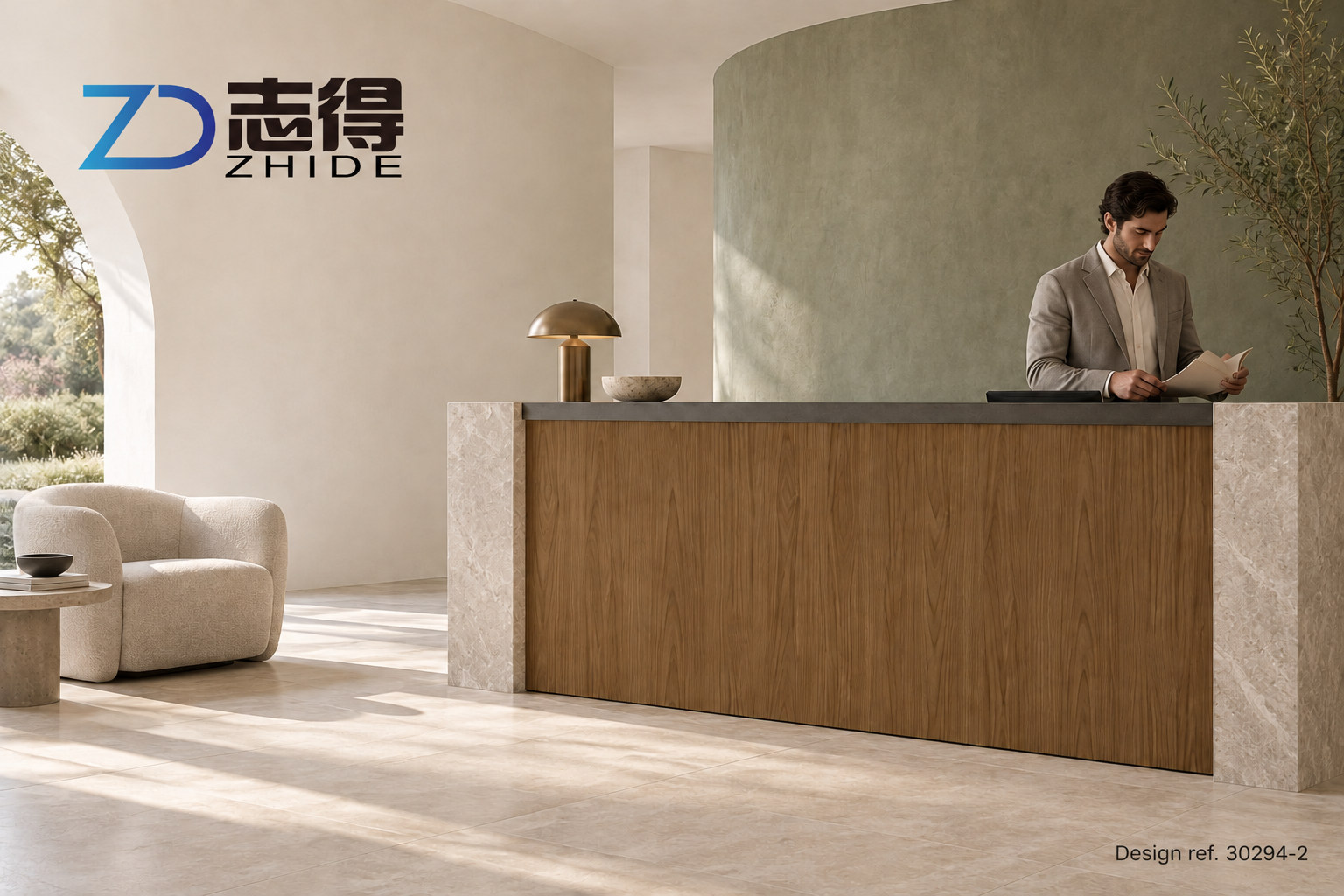
Sources checked on 31 October 2026: Konica Minolta Sensing's visual-colour evaluation PDF and article; Sony's White Balance guidance; Adobe's Color Management in Photoshop explanation, linked above. The cabinet-specific checklist is Zhide's editorial guidance. The three images are application concepts, not photographs of colour tests, matching results or completed customer installations. Colour, texture and finish are subject to confirmation with physical samples.
 Address:2nd Floor, Building 6, 120 meters west of the intersection of Chuangye Road and Xingye Road, Yitang Town, Lanshan District, Linyi City, Shandong Province
 WhatsApp:+8615020973332
 Wechat: Eden15020973332
 E-mail:eden@zhide.life