


 Language


More Language
Language 
For a wood-grain melamine board layout, choose the grain direction and the arrangement of adjacent panels before approving the decorative paper design. Mark the direction on the cabinet drawing, review the pattern at the intended panel size, and confirm the appearance with a physical sample. A small swatch can show a color family while leaving the door layout unresolved.
This guide is for buyers selecting decorative paper for furniture surfaces. A paper design is one part of a finished panel specification; it does not establish the board substrate, thickness or performance.
The Composite Panel Association describes thermally fused laminate as resin-impregnated decorative paper fused to a substrate. It also explains that press plates create surface texture. This means the printed grain and the finished surface texture need separate attention when defining the appearance.
Buyers sometimes search for “melamine wood” when they mean a wood-look decorative surface. A wood-grain reproduction should not be specified as solid wood or natural veneer. When contacting Zhide, state whether your inquiry concerns decorative paper or a finished board so the supply requirement is clear.
| Layout decision | What to mark or request | What to review |
|---|---|---|
| Main grain direction | An arrow on each visible door or panel | Vertical, horizontal or another intended orientation |
| Adjacent doors | A front elevation showing the complete group | Whether the grain should flow across the group or be treated independently |
| Pattern scale | A larger design view and the planned panel outline | How much grain movement appears within one door |
| Color and contrast | A physical sample beside the other selected finishes | Overall tone and the contrast between grain lines and background |
| Surface texture | The proposed finished-panel sample | The visual and tactile effect after the intended processing |
These are appearance decisions to document, not universal acceptance tolerances. Put the chosen layout into the drawing and order reference rather than leaving it in an unlabelled screenshot.
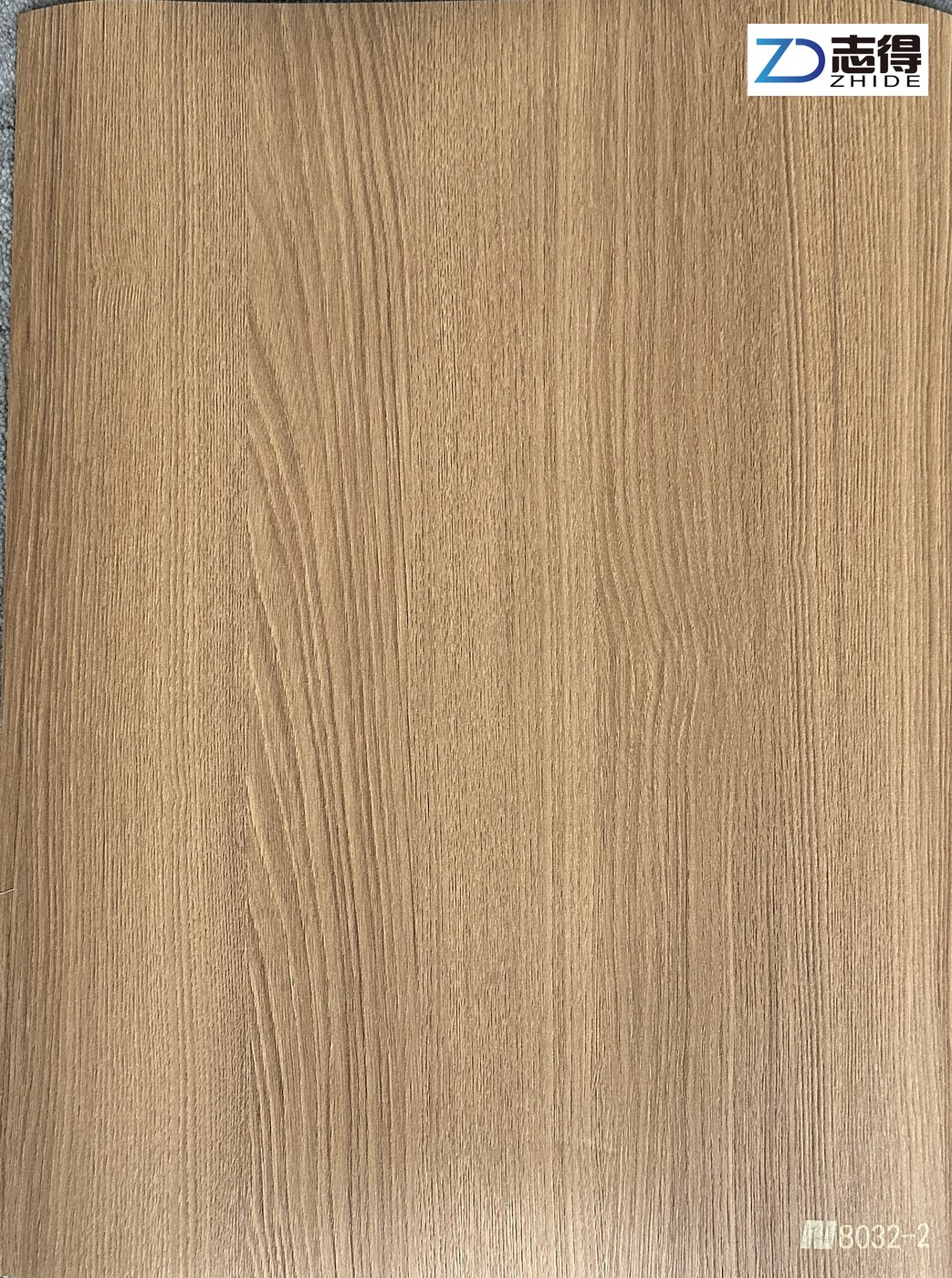
A narrow swatch and a wide door show different portions of a design. Ask for enough of the pattern to understand the planned panel face. For a tall door, review the grain from top to bottom; for a wide drawer front, check the horizontal arrangement shown in your drawing.
Keep the design reference and orientation attached to each image. Rotating a photograph may help communicate a layout idea, but identify that rotation in the approval record. A rotated image alone does not confirm that the material dimensions and production layout will accommodate the request.
Matching can mean the same design and tone, a consistent grain direction, or a specific continuous pattern across adjoining fronts. Those are different requirements. Show the intended door group and ask the panel producer which arrangement can be achieved with the proposed material and cutting plan.
If a continuous appearance is important, request a layout reference or trial that shows the adjacent faces together. Do not assume that ordering the same decorative paper code automatically produces grain continuity across every cabinet door. Keep any approved sequence or panel positions identifiable during cutting and assembly.
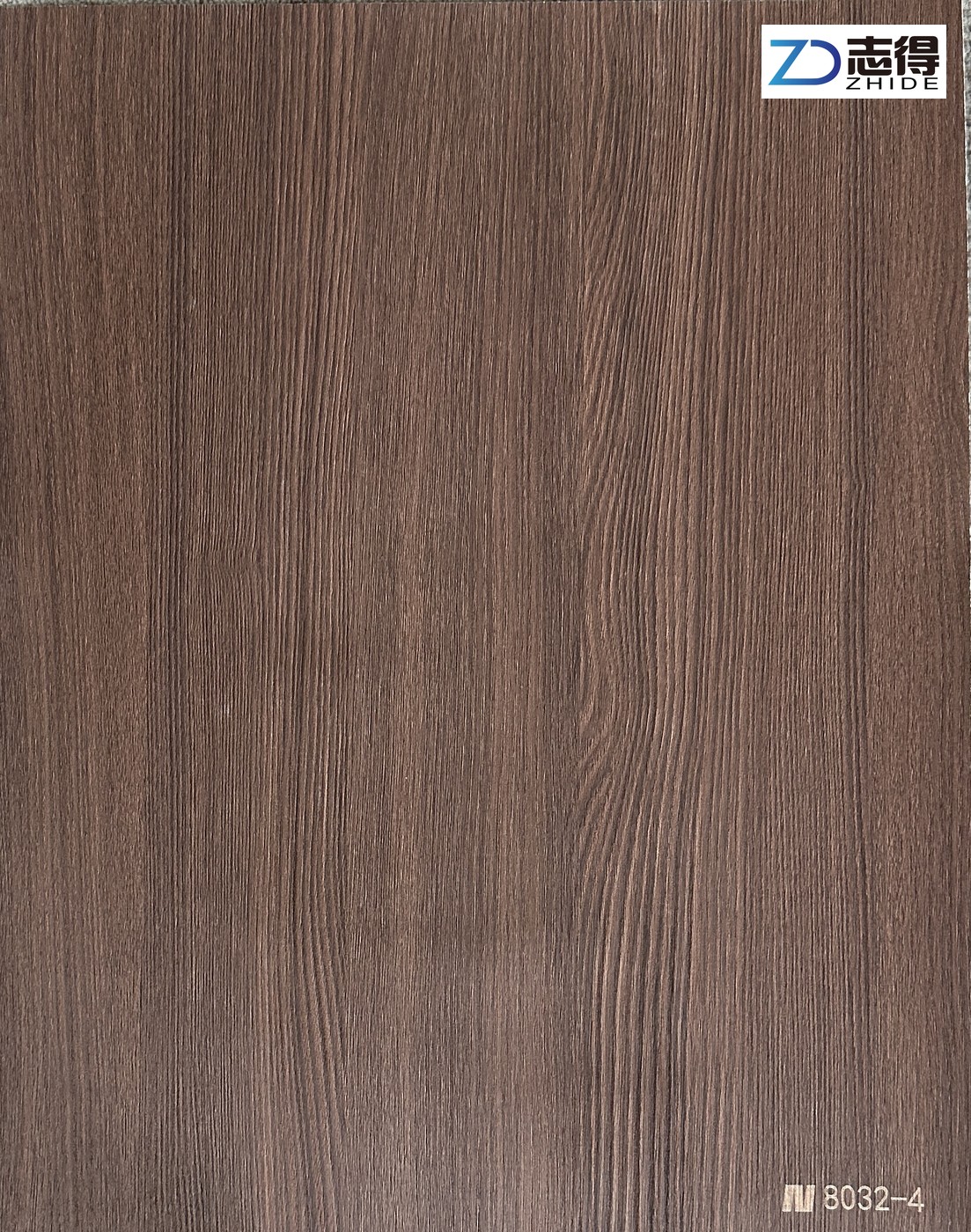
Screen brightness, lighting and photography affect the displayed color. Use online images to shortlist designs, then compare the relevant physical samples under the lighting planned for the project. If texture matters, review a finished-panel sample as well as the printed design.
Compare the wood-grain surface with the selected edging, solid colors and other nearby materials. Record the sample identifier, the proposed panel layout and any remaining question. An attractive photograph is useful for selection, while the accepted sample and drawing define what the buyer is asking the supplier to reproduce.
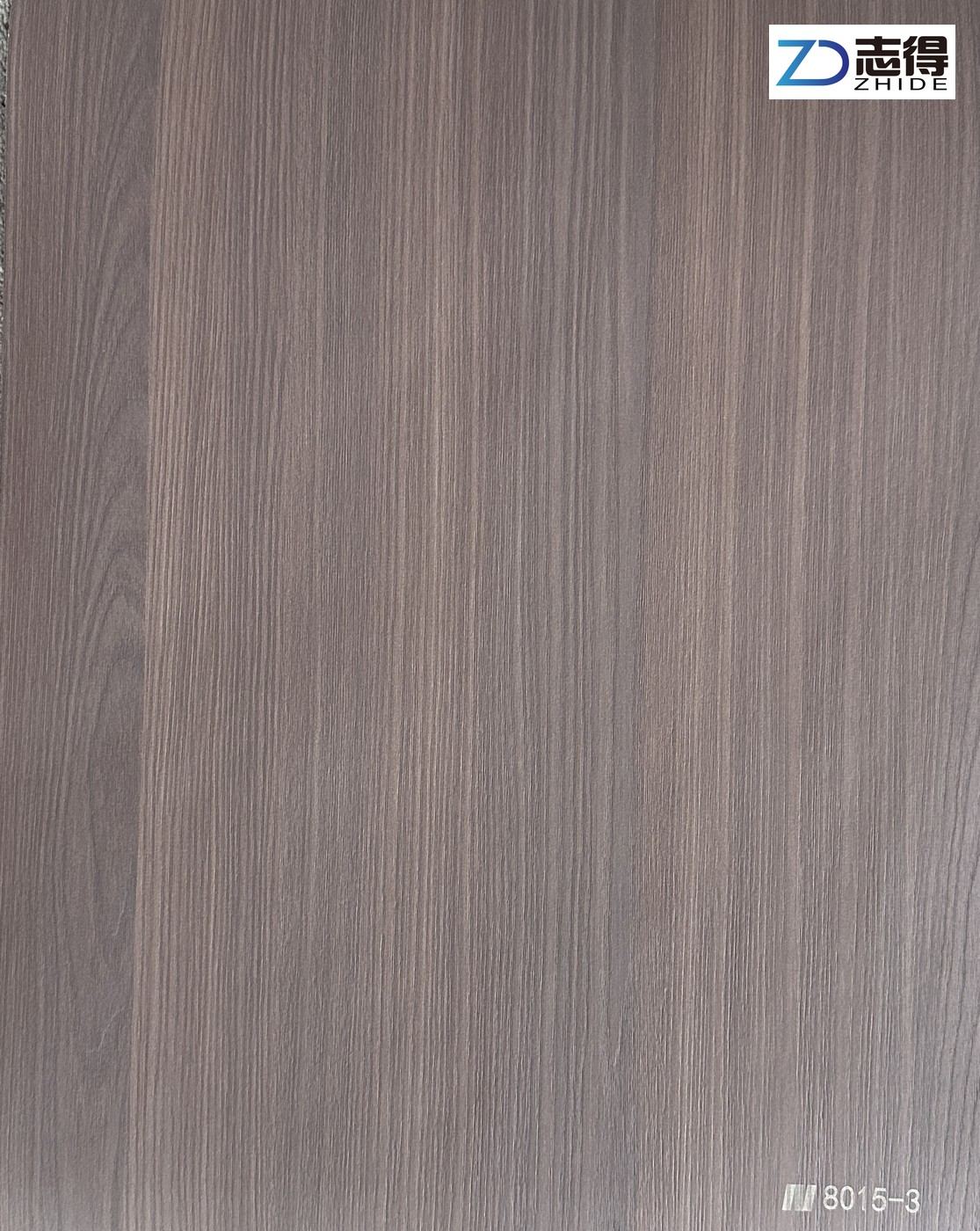
The catalogue code or a clearly identified design reference.
The cabinet elevation or panel layout, with grain-direction arrows.
The intended door or panel dimensions and the areas that will be visible.
Whether adjacent faces need a particular pattern arrangement.
The required supply form, quantity and unit, intended processing and destination.
The physical sample or trial that you want to review before ordering.
Browse Zhide's wood-grain melamine paper and synchronized embossed wood-grain design category for starting references. Confirm the selected paper specification and the finished surface requirements for the actual order. For subsequent purchases, use our melamine paper reorder checklist to retain the accepted design and sample version.
Choose the orientation for the actual furniture layout. Mark it on the drawing and review the design at the intended face size before approving it.
No. A code identifies a design reference. A continuous arrangement also requires an agreed panel layout and a feasible production and cutting plan.
No. The paper, substrate, processing and finished-panel requirements need their own confirmation.
Send Zhide your wood-grain design inquiry with the reference code, layout drawing, quantity and destination. We will discuss the sample and specification details needed for your order.
 Address:2nd Floor, Building 6, 120 meters west of the intersection of Chuangye Road and Xingye Road, Yitang Town, Lanshan District, Linyi City, Shandong Province
 WhatsApp:+8615020973332
 Wechat: Eden15020973332
  E-mail:eden@zhide.life