


 Language


More Language
Language 
For MLH veneer, approve a color range and a grade separately before ordering. MLH is a commercial grouping of Southeast Asian timbers used for rotary-cut veneer, rather than one single species. A request for “light MLH” gives a starting point, but it does not fully describe the acceptable color variation, defects or repaired areas.
Zhide's supplied material note groups MLH mainly into red, yellow and white color groups and identifies a typical thickness of approximately 0.46 mm. The following sample-approval workflow helps buyers turn those broad descriptions into a clearer order reference. It is a suggested purchasing process, not a guarantee that every sheet will look identical.
| Decision | What to specify | What to approve |
|---|---|---|
| Color group | Preferred red, yellow or white group | Acceptable light-to-dark range and natural markings |
| Face grade | A Face, B Face or C Face | Permitted color variation, pinholes and splits |
| Repairs | Whether repaired veneer is acceptable | Applicable repaired grade and repair appearance |
| Whole-sheet supply | Whether a complete sheet is required | Visual tolerances stated separately |
| Dimensions | Nominal thickness, length and width | Agreed tolerances and measurement method |
“White” is a color-group description, while “A Face” is a grading description. Do not use one as a substitute for the other. Likewise, “Whole Sheet” describes sheet completeness without automatically defining a uniform appearance standard.
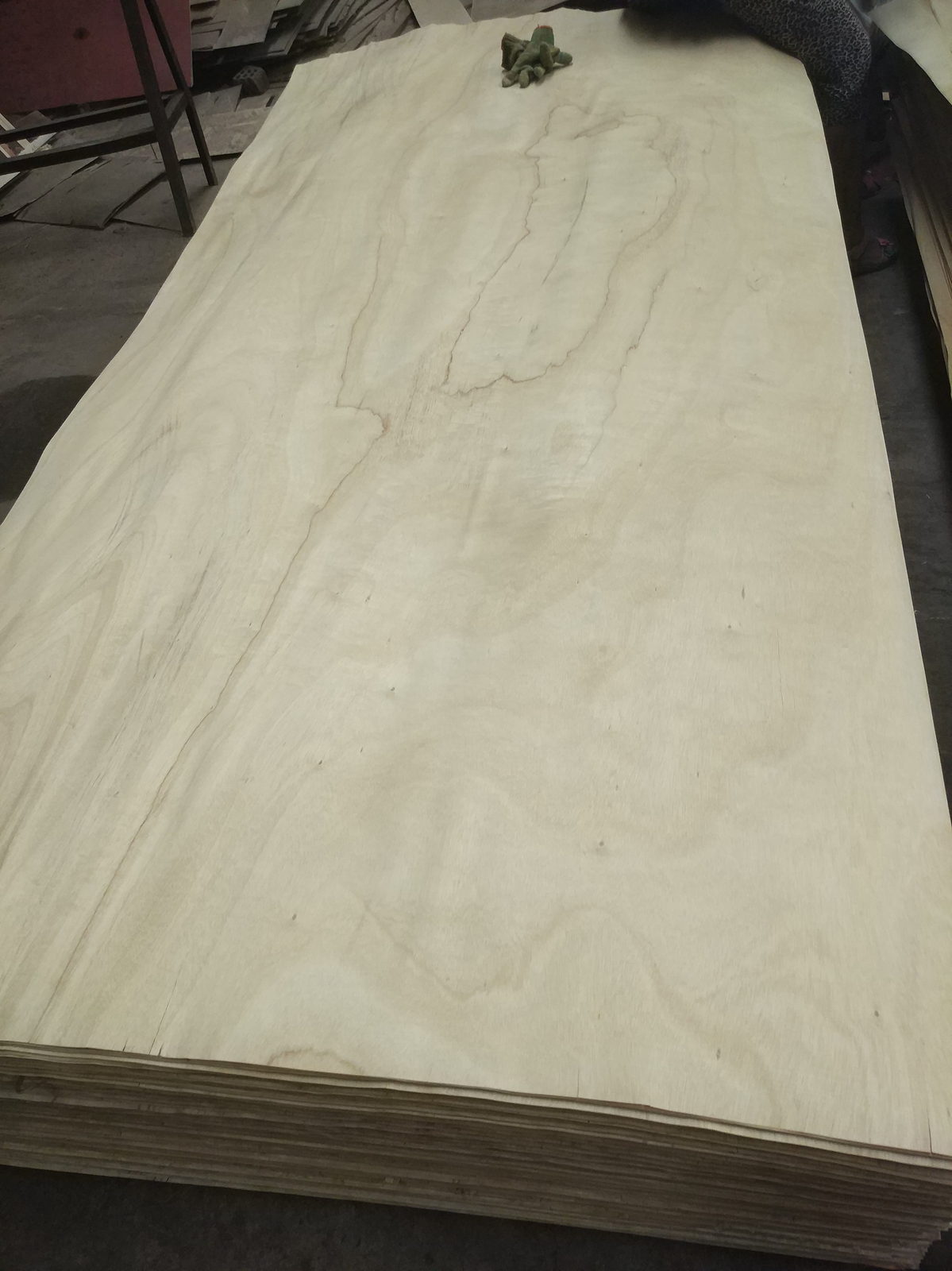
Historical light-color MLH material reference. Use an agreed physical sample when the final appearance is important.
Tell the supplier whether the veneer will be visible, covered or used in an inner layer, and describe the intended panel process. If adjacent components need a similar appearance, explain that requirement when requesting samples. A sample of one attractive sheet does not define how much variation you accept across the order.
Ask for representative references rather than only the most uniform sheet. Identify acceptable and unacceptable examples, and note the reason for each decision. Keep color variation, knots, holes, splits and repairs as separate comments.
In the supplied MLH grading note, A Face has no visible color difference or other defects, while closable splits up to 15 mm are permitted. B Face allows slight color variation over approximately one quarter of the sheet, small pinholes without insect tunnels, and closable splits. C Face does not restrict color variation; pinhole defects may occupy approximately half the sheet, and splits are permitted.
These are definitions for the described product range. Confirm their application in the order specification rather than treating A, B and C as universal labels across suppliers or timber products.
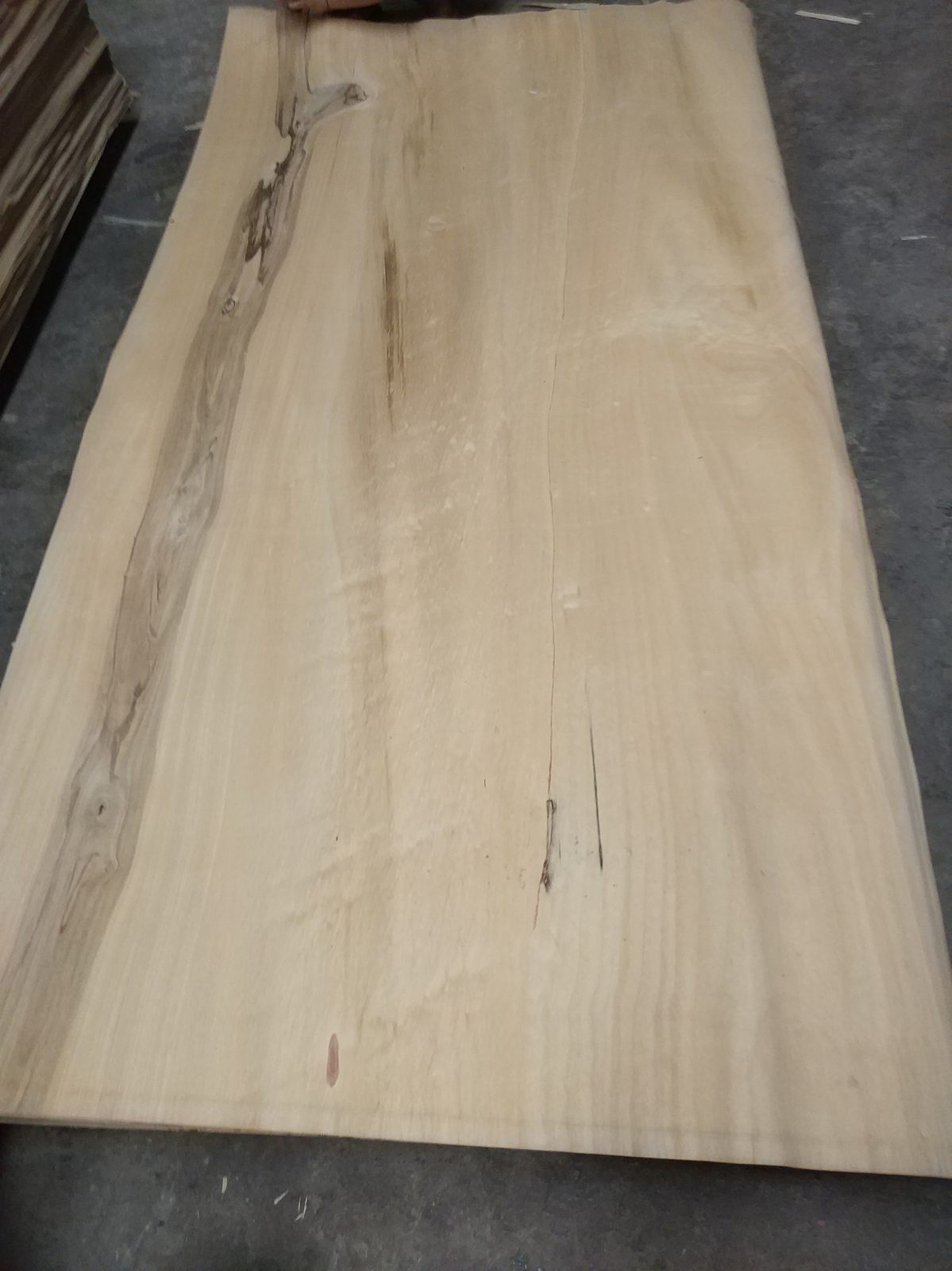
A material reference showing why full-sheet views matter. This photograph does not establish a grade or batch acceptance by itself.
If repaired veneer is acceptable, state the repaired grade in addition to the color preference. The supplied note defines A Repaired as one to five neat repairs with uniform color and repair diameter no greater than 30 cm. B Repaired allows three to six repairs with generally consistent color and repair diameter no greater than 40 cm. C Repaired permits joined pieces repaired into one complete sheet.
Request a photograph or physical example of the repair appearance you are approving. A face-grade sample should not silently become the reference for a repaired-grade order, and a complete sheet should not be assumed to be free of repairs.
Record the sample reference, approval date, selected color group, grade, dimensions and any written exceptions. Keep matching references with the buyer and supplier where practical. When using photographs, retain the original images and compare under consistent viewing conditions; different lighting and screens can make a color discussion less reliable.
For a repeat order, refer to the earlier sample and ask whether the proposed batch matches the same agreed range. If an exact look is essential, confirm it before production rather than relying on the commercial material name alone.
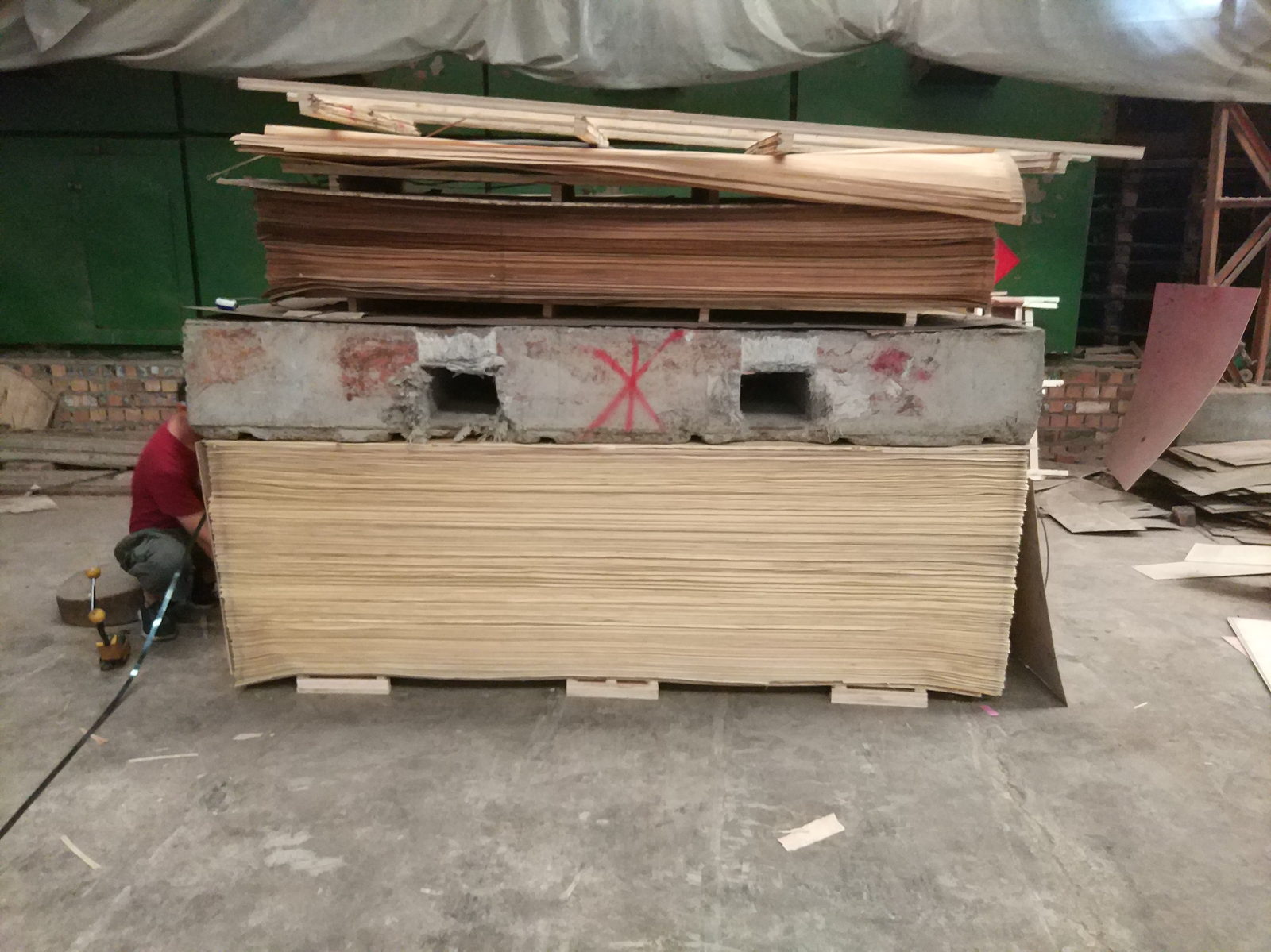
Historical MLH sheet-stack reference illustrating material handling.
A practical request includes the approved reference, color group, face or repaired grade, nominal thickness, sheet length and width, order quantity, intended use, packing needs and destination. Approximately 0.46 mm is the product's typical thickness; specify your required thickness and tolerance rather than treating that description as a measurement guarantee.
Moisture, sheet dimensions, minimum order quantity and packing details require order-specific confirmation. Ask for those terms with the quotation so the approved appearance and the commercial specification stay connected.
Review the MLH Veneer Sheets product details and MLH Veneer category. If you are comparing materials, see the rotary-cut veneer range or our veneer thickness selection guide.
Email eden@zhide.life with your preferred color range and grade, plus sample photographs where available. We will confirm the material reference and order requirements before quotation.
 Address:2nd Floor, Building 6, 120 meters west of the intersection of Chuangye Road and Xingye Road, Yitang Town, Lanshan District, Linyi City, Shandong Province
 WhatsApp:+8615020973332
 Wechat: Eden15020973332
  E-mail:eden@zhide.life