


 Language


More Language
Language 
A useful birch veneer inspection checks the agreed grade, sheet condition and order specification together. Record defects against a written acceptance reference before releasing a batch for production. A grade label alone does not confirm sheet size, thickness tolerance, moisture requirements or suitability for a particular panel process.
This checklist uses the C+, C, D+, D, E and F definitions in Zhide's supplied birch veneer grading note. These are the definitions for this product range, not a claim that every supplier uses the same grade names. Agree the inspection method and acceptance criteria for your order before shipment.
| Check | Record | Compare with |
|---|---|---|
| Batch identity | Order reference, bundle label and inspection date | Purchase order and packing list |
| Grade and appearance | Spots, holes, knots, cracks and overall sheet condition | Agreed grade definition and approved sample |
| Dimensions | Measured length, width and thickness | Ordered dimensions and agreed tolerances |
| Moisture | Reading, instrument and measurement method | Order-specific moisture requirement |
| Quantity and handling | Bundle count, sheet count where checked, and visible damage | Packing list and agreed sampling plan |
Decide how many bundles and sheets to inspect with the supplier. This article does not prescribe a statistical sampling plan or a universal pass rate. Keep measured results separate from visual observations so a disagreement can be traced to the relevant requirement.
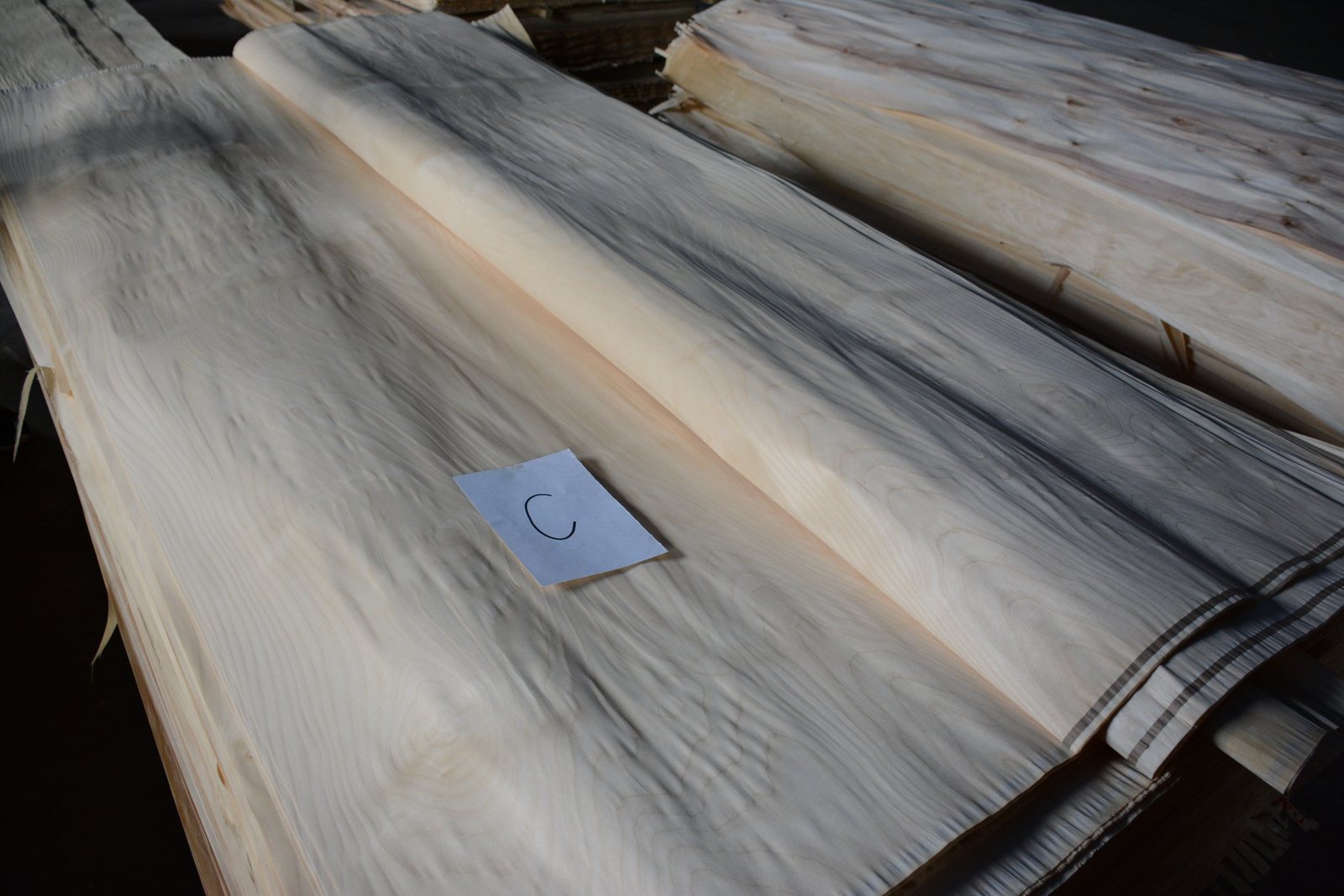
Historical C-grade material reference. The photo illustrates sheet appearance; it is not an inspection certificate for a current shipment.
For this birch veneer range, C+ excludes defects, black spots, red streaks and cracks. C allows one to three black spots with no other defects. A spot and a through-hole are different observations: record what you see rather than combining them into one defect count.
D+ permits three to six small holes approximately 2-6 mm in diameter, with good overall appearance and very few sound knots. D permits up to six holes approximately 4-10 mm in diameter; holes should not dominate the sheet, and the surface should remain presentable with few sound knots. Count and diameter must both be checked.
E permits approximately 12-16 holes depending on their diameter. The sheet should remain flat and presentable, without slanted fiber or a see-through mesh-like structure. F does not restrict hole size or surface appearance, but the sheet must remain one complete piece. Do not turn a grade's permitted defect range into an assurance that it suits every application.
Take a full-sheet view first, then a closer photograph of the disputed area. Include a scale for hole dimensions and identify the sheet or bundle in your inspection notes. A close-up alone can hide how much of the sheet is affected; a distant photo may hide a small opening.
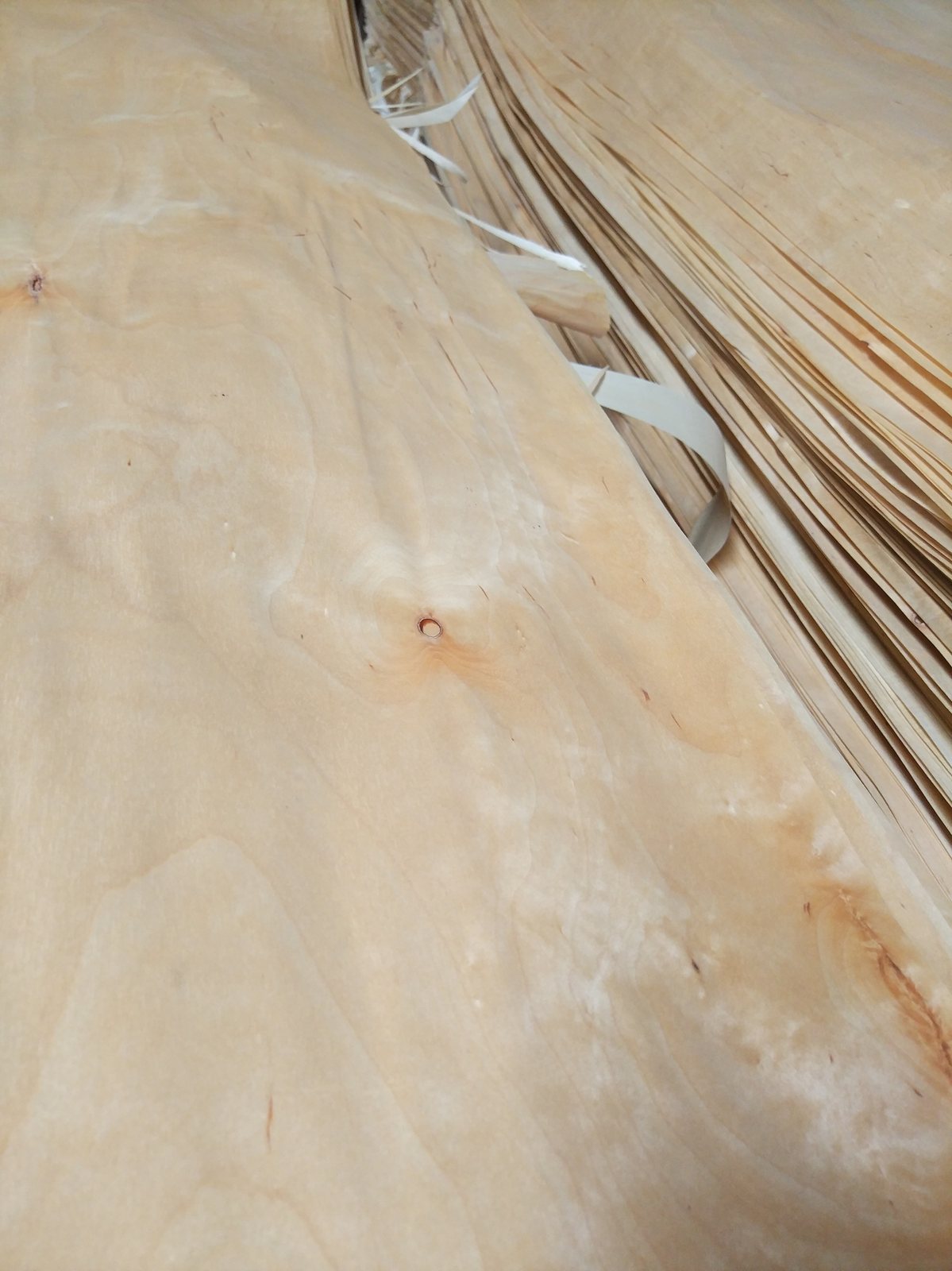
Surface detail from the E-grade reference set. Assess the complete sheet against the written grade requirements.
For example, recording only “six holes” is incomplete. Add their measured sizes, location and an overall sheet image. If a sheet appears to fit one numerical limit but fails another stated condition, keep it for review rather than approving it from the count alone.
Zhide's confirmed birch veneer thickness range is 0.19-0.55 mm. The selected nominal thickness and its acceptance tolerance still need to be written into the order. The full product range is not the tolerance for an individual batch.
Record the measurement method and agreed measurement positions. Check sheet size and visible edge damage as separate items. Where moisture is part of acceptance, confirm the target and test method in advance; no universal moisture limit is specified here.
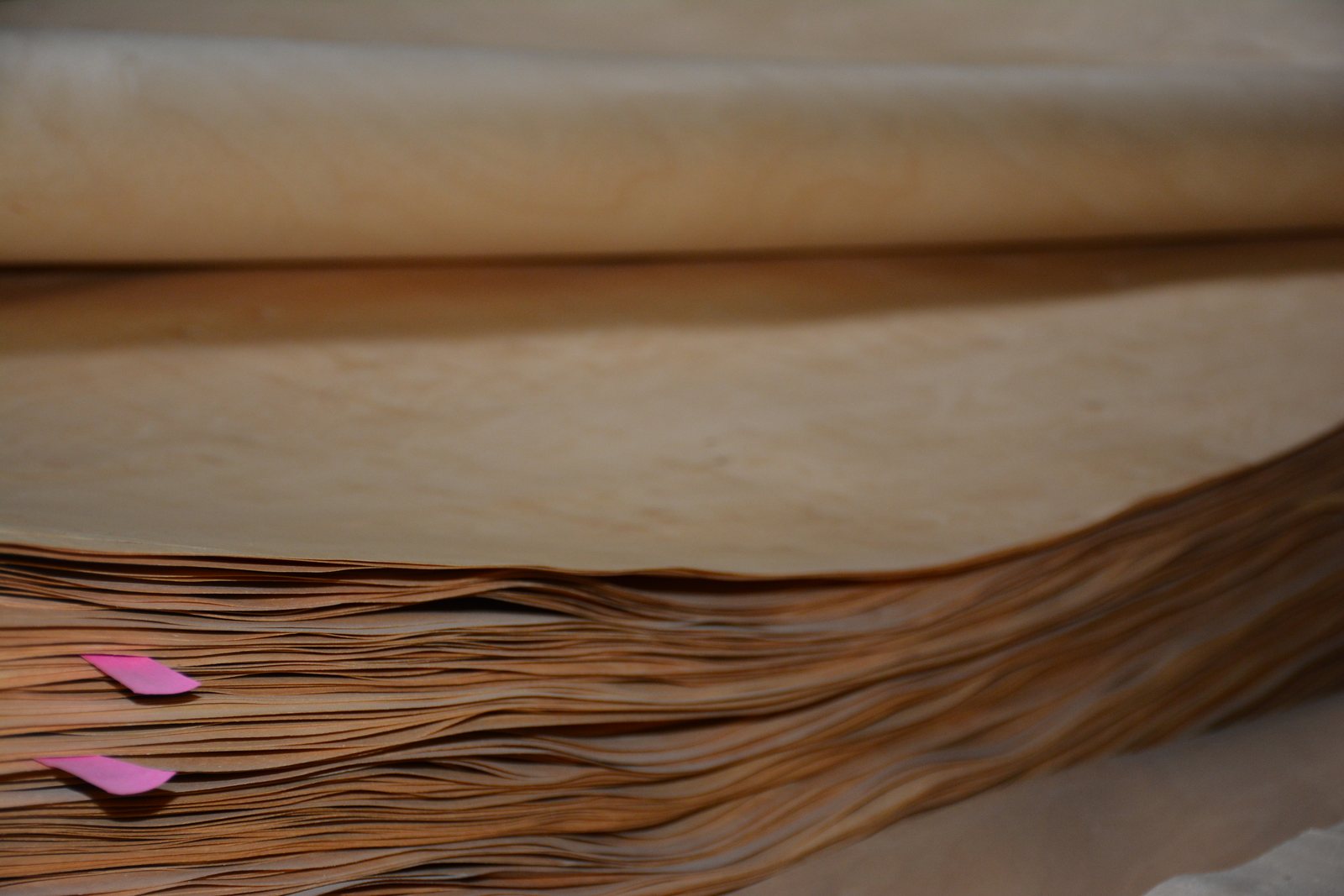
Thin birch veneer sheet edges. A stack photo cannot establish individual sheet thickness or dimensional tolerance.
Use a simple record: order and bundle reference; agreed grade; inspected quantity; dimensions and readings; defect observations; photo references; and release, hold or supplier-review decision. Keep material under review identifiable until the acceptance question is resolved.
If your order will be cut into smaller components, explain the required usable area before agreeing the grade. Do not assume a lower grade will meet your cutting plan simply because some defects can be removed.
See Birch Veneer Sheets: C+ to F grades and thickness information for the product reference, or browse the Birch Veneer category. For a wider material comparison, visit our rotary-cut veneer range.
Send your required grade, nominal thickness, length and width, quantity, intended panel use, inspection requirements and destination to eden@zhide.life. Include an approved sample or quality photographs when available so the quotation and acceptance reference describe the same material.
 Address:2nd Floor, Building 6, 120 meters west of the intersection of Chuangye Road and Xingye Road, Yitang Town, Lanshan District, Linyi City, Shandong Province
 WhatsApp:+8615020973332
 Wechat: Eden15020973332
  E-mail:eden@zhide.life