


 Language


More Language
Language 
Eucalyptus veneer grades should be agreed through a written visual standard, not through a letter alone. One supplier's “B grade” may not match another supplier's interpretation unless the acceptable holes, bark, repairs and natural appearance are clearly described.
This guide explains the confirmed A, B and C grade definitions used for Zhide's Mozambique eucalyptus veneer and shows international buyers how to turn those definitions into a practical order specification.
Illustration disclosure: The three images in this article are AI-generated educational visuals. They do not show a real product batch, factory, inspection, certificate, packing or shipment.
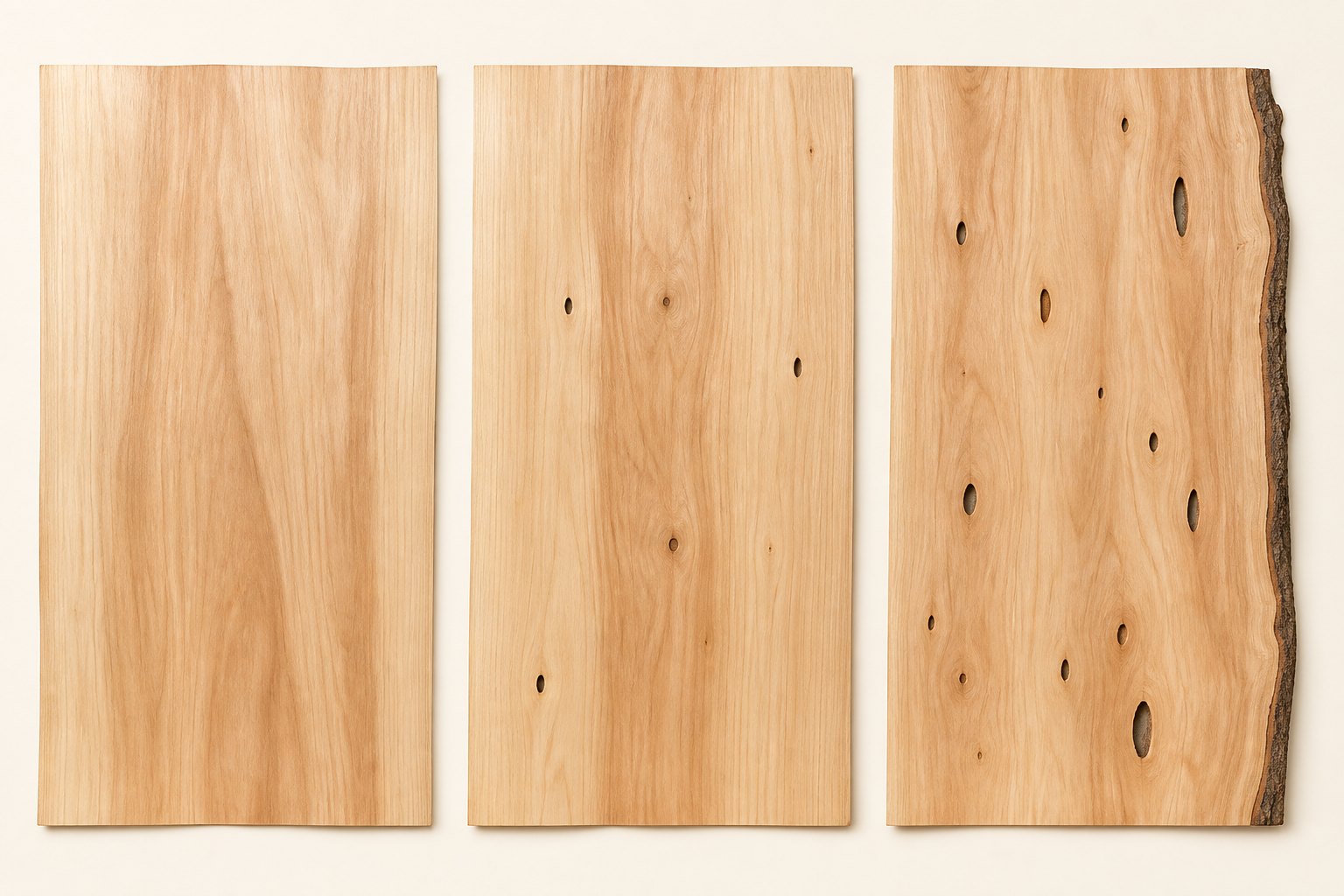
Grade letters are useful shorthand, but they are not a complete purchasing standard. A buyer should know what each letter permits and how the supplier will judge borderline sheets.
For Mozambique eucalyptus veneer supplied by Zhide, the confirmed definitions are:
A grade: no holes
B grade: small holes are permitted
C grade: holes and partial bark are permitted
These descriptions provide a starting point. The final order should still record the required sheet dimensions, thickness, quantity, packing method and an approved visual reference. Those details must be confirmed for each inquiry rather than inferred from the grade name.
A grade is the cleanest of the three confirmed classifications because holes are not permitted. Buyers commonly begin with this grade when the visible condition of the veneer surface is important to their intended panel construction.
“No holes” does not mean that every sheet will have identical color or grain. Natural wood can vary in tone, grain direction and other visual characteristics. If appearance consistency is important, the buyer should approve a sample or a set of reference images that shows the acceptable natural range.
Before ordering A grade, confirm:
That holes are not permitted
Whether repairs are acceptable or must be excluded
The accepted natural color and grain range
Required sheet length and width
Required thickness and its measurement method
Packing and handling requirements
B grade permits small holes. The word “small” should not remain undefined in a contract or purchase order. The buyer and supplier should agree on a visual reference or measurable limit before mass production.
A clear B grade approval should answer questions such as:
How many small holes may appear on one sheet?
Where may the holes appear?
Is a cluster of small holes acceptable?
Are repairs allowed?
How should borderline sheets be classified?
If the buyer cannot define every point in writing, an approved physical sample or a dated set of quality photos can provide a more useful reference than the grade letter alone.
C grade permits holes and partial bark. Because the accepted visual range is broader, buyers should be especially clear about how the veneer will be used and which conditions are unacceptable for their process.
The presence of holes or partial bark should not be interpreted as a fixed engineering performance claim. Grade describes the agreed visual condition; it does not replace confirmation of the substrate, panel construction, adhesive, pressing process or other production requirements.
For C grade inquiries, confirm:
The acceptable size, number and position of holes
How much partial bark is acceptable
Whether loose or unstable edge areas must be excluded
Whether repairs are allowed
The sample or photo set that will govern final inspection
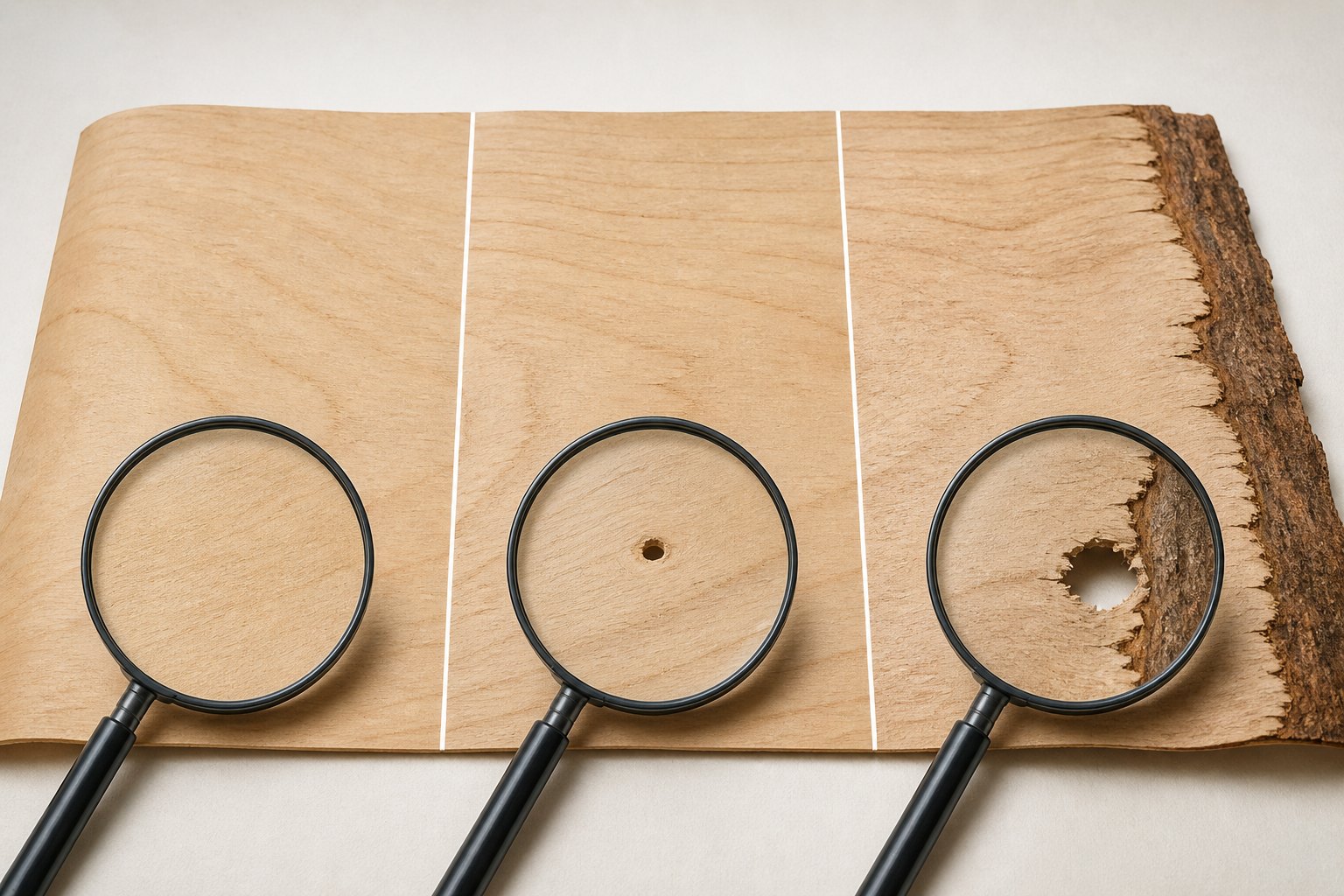
| Decision point | A grade | B grade | C grade |
|---|---|---|---|
| Holes | Not permitted | Small holes permitted | Holes permitted |
| Partial bark | Not included in the confirmed definition | Not included in the confirmed definition | Permitted |
| Visual approval | Recommended | Strongly recommended | Strongly recommended |
| Color and grain | Confirm accepted natural range | Confirm accepted natural range | Confirm accepted natural range |
| Dimensions and thickness | Confirm separately | Confirm separately | Confirm separately |
| Packing and quantity | Confirm for each order | Confirm for each order | Confirm for each order |
The table summarizes the confirmed grade differences, but it should not be used as a substitute for an approved sample and complete order specification.
Grade, thickness and sheet dimensions answer different purchasing questions:
Grade describes the agreed visual condition and defect allowance.
Thickness defines a nominal sheet specification and requires an agreed measurement method.
Dimensions define the required sheet length and width.
A buyer should record all three fields separately. For example, requesting “B grade eucalyptus veneer” does not automatically define its thickness or dimensions. Leaving these fields open can cause unnecessary quotation revisions and sample disagreements.
A practical approval process can include:
Buyer sends the intended application and complete specification.
Supplier prepares representative samples or quality photos.
Buyer identifies the accepted grade and natural appearance range.
Both sides record any limits for holes, bark and repairs.
The approved reference is attached to the order documentation.
The reference should be treated as a purchasing standard, not as a certificate. If the order is large or the visual requirement is narrow, the inspection and sampling method should also be agreed in advance.
Include the following information in the first inquiry:
Product name and origin requirement
Required grade: A, B or C
Accepted hole and bark conditions
Required thickness
Sheet length and width
Order quantity
Packing requirement
Destination port
Intended application
Approved sample or reference photos, when available
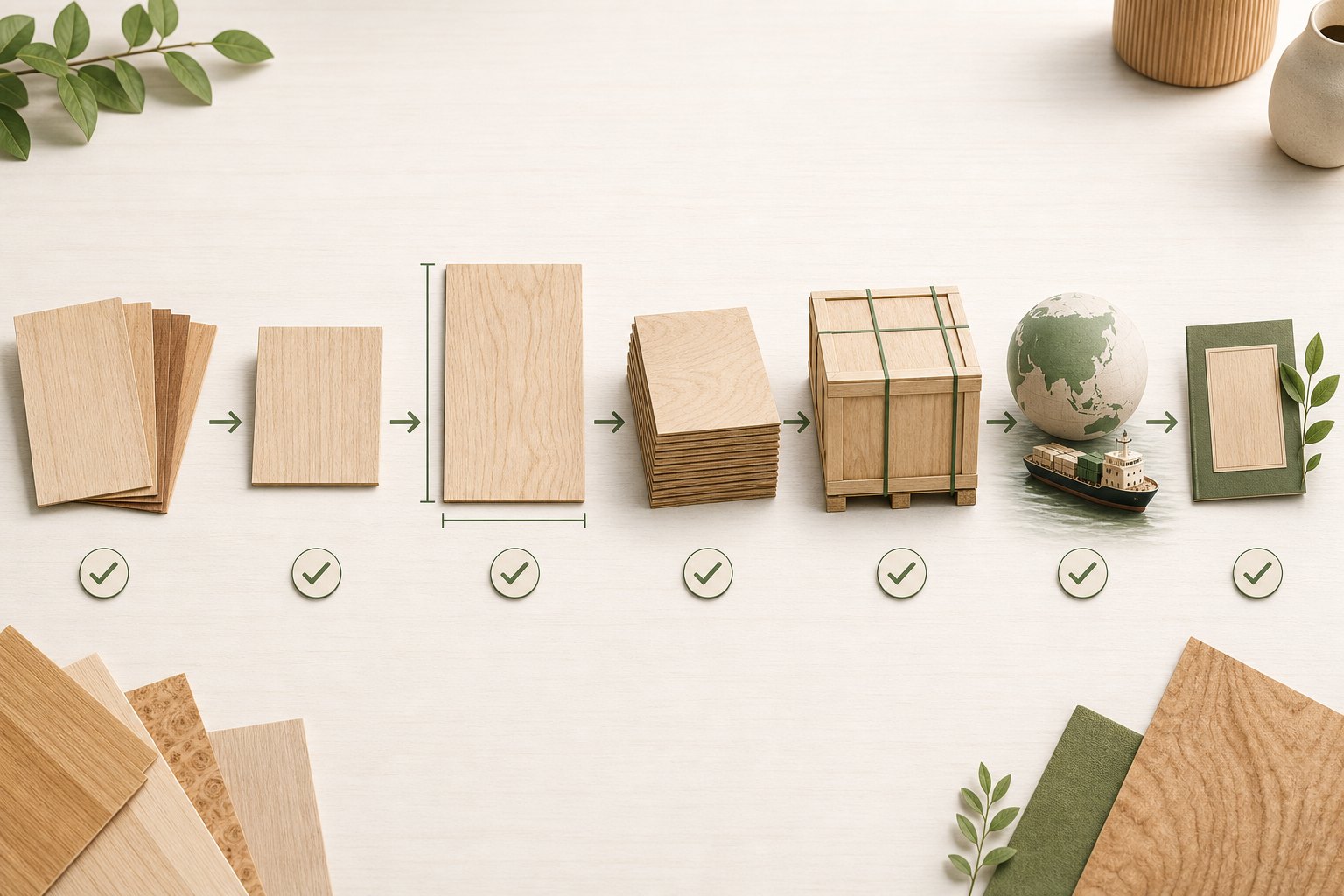
A complete inquiry helps the supplier prepare a more accurate quotation and reduces repeated clarification before production.
Zhide supplies Mozambique eucalyptus veneer sheets with confirmed A, B and C grade definitions. A grade has no holes, B grade permits small holes, and C grade permits holes and partial bark.
Thickness, sheet dimensions, moisture, quantity, packing and other commercial specifications should be confirmed for each order. View the available grade information on the Mozambique Eucalyptus Veneer Sheets product page, or send your specification and destination port to request a quotation.
No. A grade is the cleanest confirmed classification because holes are not permitted, but the suitable grade depends on the buyer's application, process, appearance requirement and approved sample.
B grade permits small holes. C grade permits holes and partial bark. The acceptable size, number and position of these conditions should be agreed through written limits or an approved visual reference.
No. Grade and thickness are separate specification fields. Thickness, dimensions and their measurement methods should be confirmed independently for each order.
Natural veneer can vary in color, grain and visual characteristics. An approved sample or reference photo set gives the buyer and supplier a clearer standard for the accepted range.
Send the product, origin requirement, grade, thickness, sheet dimensions, quantity, packing requirement, destination port, intended application and any approved reference images.
 Address:2nd Floor, Building 6, 120 meters west of the intersection of Chuangye Road and Xingye Road, Yitang Town, Lanshan District, Linyi City, Shandong Province
 WhatsApp:+8615020973332
 Wechat: Eden15020973332
  E-mail:eden@zhide.life