


 Language


More Language
Language 
Wood veneer is a thin layer of real wood; a melamine decorative surface uses a paper-and-resin system on a substrate. Choose veneer when the brief requires real wood and accepts agreed natural variation. Compare melamine decorative paper when the brief calls for a specified printed design. For either option, approve the complete finished panel: the face material alone does not establish durability, moisture resistance or total cost.
This guide compares the purchasing decisions behind wood veneer vs melamine. Confirm whether the quotation covers raw veneer, printed or impregnated paper, a surfaced board or a finished component before comparing prices.
| Buying question | Wood veneer | Melamine decorative surface |
|---|---|---|
| What is the face material? | A thin layer of natural wood; confirm species and grade. | A decorative paper and resin system; confirm the supplied material and processing stage. |
| How is appearance specified? | Agree on colour range, grain, knots, repairs and sheet selection. | Agree on design code, colour, pattern repeat and intended surface texture. |
| What processing is included? | Confirm backing, bonding and finishing requirements. | Confirm impregnation where applicable, substrate and pressing requirements. |
| How should durability be compared? | Check the finished assembly, coating, substrate and edges. | Check the finished assembly, surface, substrate and edges. |
| Which costs belong in the quote? | Include material, selection yield, bonding, finishing and edge treatment. | Include material, processing, substrate, pressing and edge treatment. |
| What sample should be approved? | Representative sheets plus the intended finished panel. | The selected design plus a representative finished-panel trial. |
Browse veneer species and grade options or melamine decorative paper collections to identify a starting reference. The three photographs below show real material references; final colour, texture and performance require sample approval.

Natural wood veneer is a thin layer of wood. Melamine decorative paper is part of a different surfacing system: the paper, resin treatment where applicable, substrate and pressing process contribute to the finished result. A decorative paper quotation should not be treated as a quotation for a ready-to-install furniture panel.
Before comparing prices, specify whether you need raw veneer, backed veneer, printed paper, impregnated paper, a surfaced board or a finished component. Ask which processing stages are included. Two samples can have a similar colour while requiring very different equipment, labour and finishing steps.
For veneer: identify species, grade, thickness, sheet dimensions, face selection and the intended bonding and finishing process.
For decorative paper: identify the design reference, supply condition, intended substrate, surface texture and the production trial required.
For either route: compare the complete approved assembly, including its edges and reverse face, rather than the face material alone.
Start with veneer when the specification calls for actual wood at the visible surface and accepts an agreed range of natural variation. The selection conversation should include colour range, grain character, knots, repairs and other grade features. One attractive sheet is not enough to define an entire order.
For example, buyers can review Pine Veneer Sheets for natural material appearance, then confirm the exact sheet specification for their project. Do not assume a pine sample demonstrates the appearance or behaviour of birch, eucalyptus or another species.
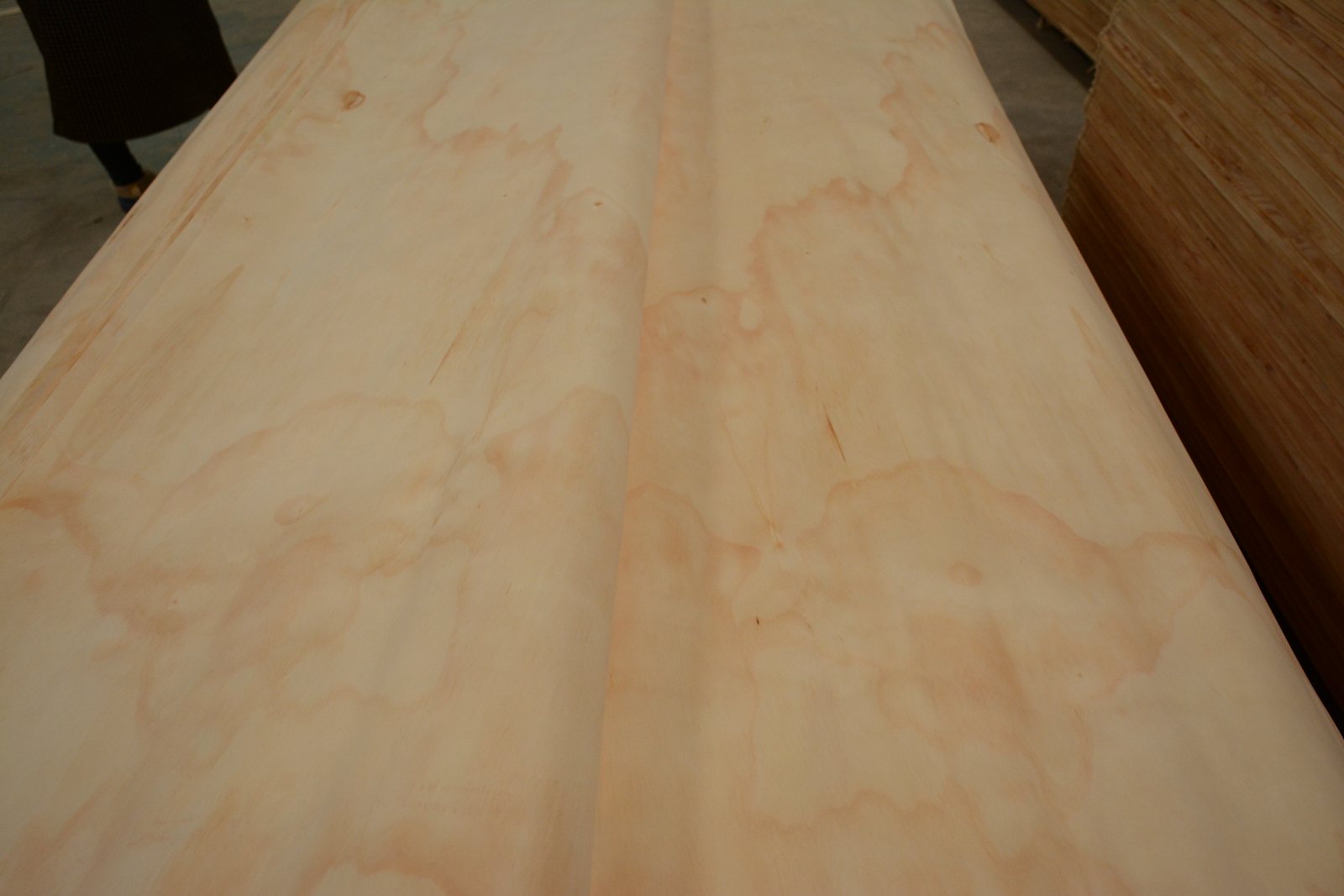
A useful sample approval includes several representative sheets and a written acceptance range. If adjacent doors must appear coordinated, discuss selection and layout before cutting. Confirm the appearance after bonding and finishing, not only while the veneer is loose.
Consider a printed wood-grain route when the project needs an identified decorative design that can be specified across a furniture range. The quotation still needs a production-ready definition: design code, colour reference, grain direction, texture requirement and the form in which the material will be supplied.
For a tactile brief, explore synchronized embossed wood grain paper. Ask the supplier and panel producer how the decorative design and intended pressed texture will work together. Do not assume that an embossed appearance in a photograph proves that a proposed paper and press-plate combination will achieve the required registration.
Use the 8011 wood-grain collection as a starting point for a sample discussion. Request a representative finished-panel trial before making claims about scratch resistance, cleanability, moisture performance or service life.
Full-panel appearance: inspect grain direction, scale and visual repetition on more than one panel.
Lighting: view the sample under the project's intended lighting and compare adjacent surfaces together.
Touch and gloss: use a physical sample; a screen cannot reliably communicate either.
Edges and assembly: inspect edge matching, corners and the reverse face as part of the furniture component.
Documented acceptance: record the approved sample, tolerances, inspection method and who approves a production change.
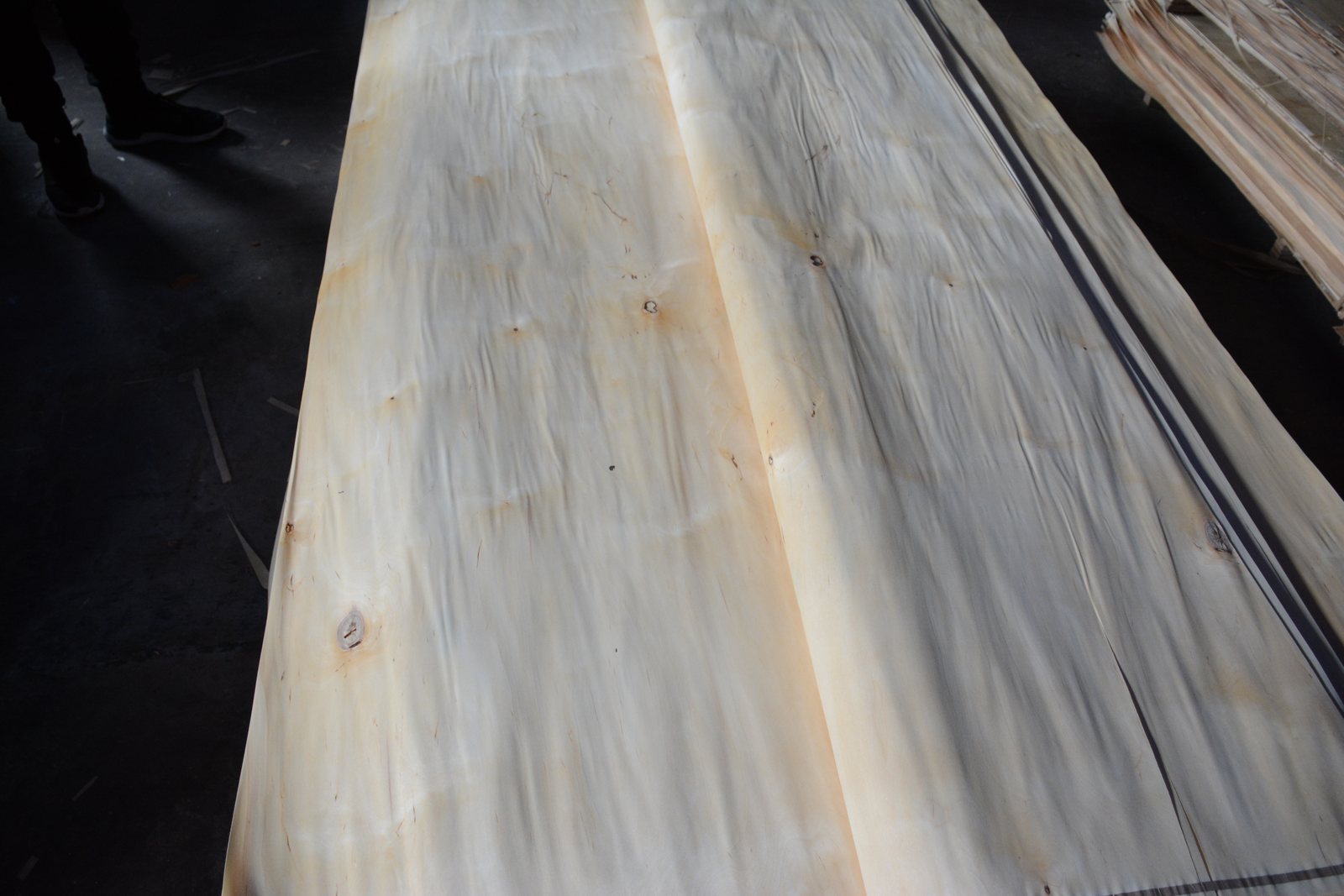
For a separate species comparison, see Birch Veneer Sheets and Grade Options. Zhide's recorded birch range covers C+, C, D+, D, E and F grades with thickness from 0.19 to 0.55 mm. Confirm the selected grade and order-specific dimensions rather than applying this range to every veneer species.
Include the furniture application, destination market, material supply stage, face design or species, dimensions, quantity, substrate and processing plan. Attach your appearance reference and explain which features are essential. Ask for the sample route, technical documentation, packing proposal and delivery terms to be confirmed in the quotation.
A useful request is: “We are comparing a natural veneer face with a wood-grain decorative paper system for this furniture component. Please identify the supplied material, the processing still required and the sample needed to approve the complete panel.” This avoids comparing a raw material price with a finished surface price.
No. Similar appearance does not make them the same material. Specify the actual face construction and supply condition in the purchase order.
No. Appearance alone is not a performance result. Ask for evidence relevant to the exact finished product and intended use.
There is no reliable universal answer. Compare equivalent finished components, including processing, yield, finishing, edge treatment and the agreed quality requirements.
A useful furniture surface comparison starts with a clear specification. Choose the appearance you want, identify the material system that can deliver it, and approve a representative finished sample. Send Zhide your veneer or decorative paper inquiry with the application and reference images so that the relevant product options and unconfirmed details can be discussed.
 Address:2nd Floor, Building 6, 120 meters west of the intersection of Chuangye Road and Xingye Road, Yitang Town, Lanshan District, Linyi City, Shandong Province
 WhatsApp:+8615020973332
 Wechat: Eden15020973332
  E-mail:eden@zhide.life